
Seeing, Choosing, Living
The Character of RainThis flow develops the book's idea that life begins when attention selects one thing and excludes others.
increasing Bearing strength in each event
 decreasing
Bearing strength in each eventdecreasingEyes Without Sight
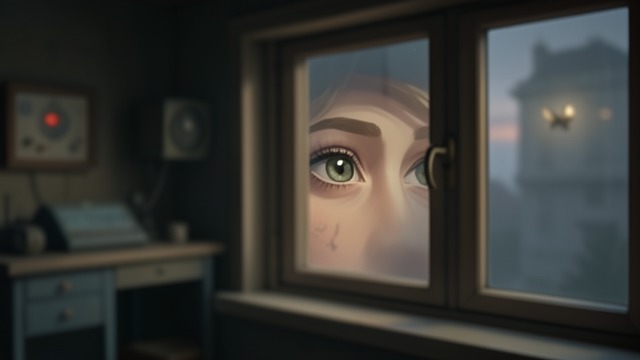
Eyes Without Sight
Seeing as a capacity
The narration begins by distinguishing eyes from the experience of sight. A living eye does more than remain open; it apprehends something.
Life requires attention
Sight matters because it fixes awareness on one object rather than every object at once. Perception becomes an early measure of life’s engagement with the world.
The Unseeing Tube
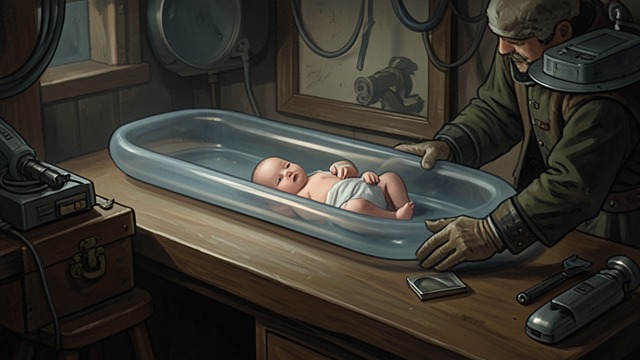
The Unseeing Tube
A gaze without selection
The infant's eyes remain open, but the child appears to perceive nothing. Nothing in the environment draws a visible choice or reaction.
Life suspended
The Narrator (God) is described as an unseeing Tube, existing without the acts of attention that distinguish a living subject. Stillness makes the boundary between life and nonlife uncertain.
The Fury of Refusal
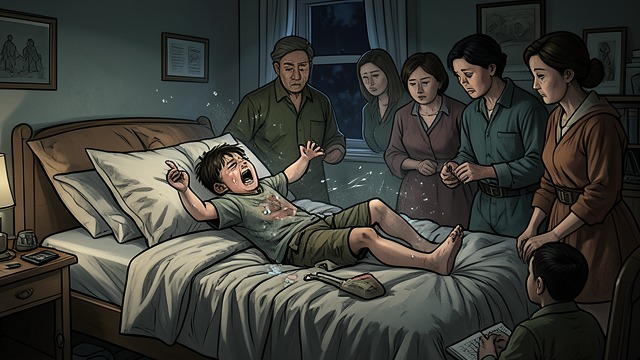
The Fury of Refusal
A first rejection
When the child suddenly screams and kicks, the family witnesses unmistakable resistance. The Narrator (God) is no longer passively receptive to every circumstance.
Refusal as life
The outburst suggests that life begins with the ability to object. Anger is difficult for the family but marks a decisive separation between self and surroundings.
Attention in the Garden
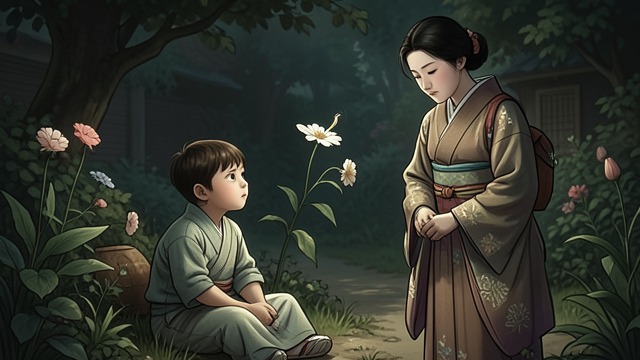
Attention in the Garden
Choosing a subject
The child studies flowers, rainbows, and trees while treating the garden as a world organized around its gaze. Attention gives particular things a distinct presence.
Power and limitation
The child believes that flowers answer commands, but Kashima-san’s indifference cannot be overcome. Choosing what to see does not mean controlling how another person responds.
A Choice Beneath Water
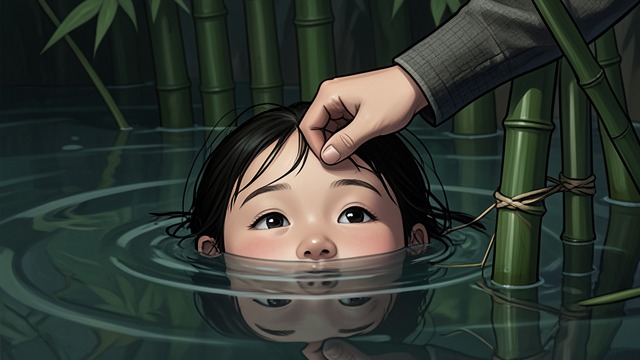
A Choice Beneath Water
A narrowed field
Underwater, the Narrator (God) chooses to look at bamboo and experiences the scene as beautiful and calm. The child’s attention excludes the fear that had shaped the earlier drowning.
Choice tested by survival
The apparent freedom to accept death is interrupted by Nishio-san’s rescue. The episode complicates the idea that choosing an experience is the same as being able to determine its outcome.
At the opening, before the Tube is named
During the Narrator (God)'s first two years
At age two
Spring 1970, after speech begins
August 1970, during the koi-pool crisis
